A tentative improvement The 0.1% m/m rise in house prices in September matched August’s modest gain, and points to a tentative house price recovery from here. We are predicting that a pick-up in demand paired with nagging undersupply will support prices …
25th November 2025
CBN holds as policymakers display caution The Central Bank of Nigeria’s decision to keep its policy rate on hold at 27.00% today came as a surprise, especially given the dovish story told throughout the statement. A stop-start monetary easing cycle from …
Slightly above-target gain in core PCE deflator The PPI components feeding into the PCE deflator were, on balance, slightly hotter than we had initially anticipated, leading us to estimate that core PCE prices rose by 0.25% m/m in September. The 0.1% m/m …
A softer end to the third quarter The slightly softer-than-expected retail sales data for September won’t be enough to spoil the third quarter, with our estimate of third-quarter GDP growth still 3.6% annualised. But, together with the likely weakness of …
Fears of an influx of imports from China to the euro-zone this year have not materialised. The volume of imports from China has risen but not at an exceptional pace, and both volumes and values remain below their peaks. Moreover, the value of imports of …
The muted, uneven recovery in European investment continued in Q3, with indicators suggesting this will persist in Q4. The outlook for 2026 looks brighter, with lower interest rates providing a key support. However, mismatches in pricing expectations are …
Asia Chart Pack (November 2025) …
Watch a recording of our 4th December online briefing about Russia-China relations here . Russia and China declared a “no limits” partnership in 2022, but the economic limits to the relationship have become increasingly clear. Chinese FDI in Russia …
The tighter labour market in Australia will continue to encourage large numbers of New Zealanders to move to Australia, holding back the recovery in the housing market and consumer spending. While lower population growth also reduces the economy’s supply …
Egypt’s devaluation and shift back towards macro orthodoxy 18 months ago have put the economy back on the path towards restoring macroeconomic stability. The situation is still very fragile – Egypt gets high risk scores on our proprietary EM Financial …
24th November 2025
BoI resumes easing cycle, but cautiously The decision by the Bank of Israel (BoI) to cut its policy rate by 25bp today, to 4.25%, was accompanied by communications which suggest that further monetary easing will be approached cautiously and will depend on …
Europe Commercial Property Chart Pack (Q4 2025) …
Inflation unchanged, but December cut still on the cards The Mexican inflation outturn of 3.6% y/y in the first half of November, coming alongside the contraction in GDP in Q3, means Banxico will probably opt for another 25bp cut at its next meeting …
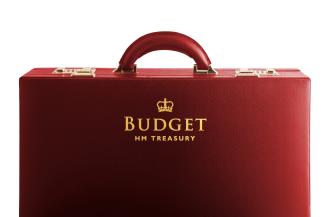
Fiscal policy returns to centre stage this week, with Chancellor Rachel Reeves set to deliver her Autumn Budget on Wednesday. The debate will revolve around the size of the fiscal squeeze required to hit the government’s self-imposed rules and, crucially, …
This checklist helps clients track the policies and forecasts announced in the Chancellor’s Autumn Budget at 12:30pm (GMT) on Wednesday 26 th November. Read our Previews here . We will send a Rapid Response after the speech, host an online briefing at 3pm …
While most agriculturals prices – and food price inflation – will decline alongside crude oil prices next year, structural supply headwinds will keep the prices of edible oils and beef elevated. For context, most agriculturals prices have fallen this …
German economy still weak The fall in the German Ifo in November chimes with the drop in the Composite PMI and suggests that the German economy remains weak, with the fiscal stimulus is not yet having a meaningful impact. We still expect growth to pick up …
Equity markets remain under pressure even after positive news on both AI demand and the US labour market. A renewed sell-off in Japan’s bond market isn’t helping matters. Meanwhile, we think the UK will avoid another budget (and Gilt market) mess, but the …
Fed officials split on need for a Dec rate cut The minutes of the October FOMC meeting were unusually blunt, warning that “many” Fed participants thought it would be appropriate to leave rates unchanged for the rest of the year, whereas only “several” …
21st November 2025
US continues to pick on South Africa & Nigeria The US’s boycott of South Africa’s G20 presidency and escalating threats of sanctions towards Nigeria will worry their respective governments, but both economies are holding up well with domestic factors …
A busy week of data releases has left us more confident in our view that the Bank of Canada will feel the need to cut its policy rate below neutral at some point next year to support the economy – not least given that the federal budget, which survived …
Our base case is that the bubble in AI hasn’t burst: we still think it has another year or so to inflate. But given Thursday’s pullback in equities, it isn’t out of the question that it is starting to burst now. Yesterday’s slump in the S&P 500 didn’t …
Chile: Kast heads into run-off with momentum Left-wing candidate Jeannette Jara and right-wing candidate José Antonio Kast received the highest share of votes in Chile’s presidential election last Sunday (27% and 24%, respectively). They go to a run-off …
Is the bubble bursting? Despite a big earnings beat from Nvidia, concerns about overheated AI valuations are mounting. Jonas Goltermann weighs the risks that the equities rally is fading. We also look at what to expect from Rachel Reeves’ Budget after an …
Details have emerged this week of a new US-Russian led framework to end the war in Ukraine. A draft copy of the 28-point peace plan was published by the Financial Times , and the terms of the agreement make significant concessions to Russia. This includes …
Soft demand supports argument for further easing in 2026 The drop in retail sales in September means growth in household consumption slowed to around 1.0% annualised in the third quarter, from 4.5% in the second. With the advance estimate for October …
The Central Bank of Egypt’s (CBE’s) monetary easing cycle has been stop-start. But with interest rates very high and disinflation set to resume in Q1 2026, it won’t be too long before policy loosening comes back onto the agenda. We expect more easing than …
It’s becoming increasingly clear that the two main guardians of the UK economy will play conflicting parts in the policy pantomime this festive period. Reeves plays Scrooge We all know the Chancellor, Rachel Reeves, will tighten fiscal policy in the …
One minute sanctions, the next a peace deal? As tighter US sanctions on Lukoil and Rosneft – two oil producers that account for around 50% of Russia’s crude exports – come into effect (see here ), it appears that progress is being made on ending the war …
Consumer caution is understandable Data published this morning showed that wage growth continues to slow. Growth in negotiated wages – i.e. pay determined by collective bargaining agreements – dropped from 4.0% y/y in Q2 to just 1.9% in Q3, which was its …
An average annual council tax surcharge in the Budget on 26 th November of possibly around £2,000 for owners of the most expensive homes may be only a modest drag on activity and prices at the top end of the housing market. But London and the South East …
Bank Indonesia independence fears flare up again Indonesia’s central bank left interest rates on hold at 4.75% on Wednesday but the more interesting development was the invitation extended to the finance minister to attend monetary policy meetings. Whilst …
Trade deficit to narrow, rupee to weaken gradually We learnt this week that India’s trade deficit widened to the largest on record in October. This has revived worries about the rupee, which is hovering near all-time lows against the US dollar. But there …
We’re hosting a 20-minute online briefing at 3pm GMT on Wednesday 26 th November responding to the Chancellor’s Budget and assessing what it means for the economy, housing and financial markets. (Register here .) This page has been updated with additional …
Mortgage subsidies would offer limited relief Policymakers are mulling a new property stimulus package, according to Bloomberg. Measures being considered include mortgage interest subsidies for new homebuyers nationwide, lower transaction fees and higher …
Substantial pick-up in growth remains elusive November’s flash PMI for the euro-zone was little changed from the reading in October and suggests that the economy has continued to expand only slowly in the fourth quarter, while inflationary pressures …
We think gilt yields are more likely to fall than rise in the immediate aftermath of the Budget on 26 th November. But the chances of an adverse gilt market reaction remain high, and the Budget poses an upside risk to our forecast for the 10-year gilt …
If the AI stock market boom turned to bust, we suspect the correction would be somewhat smaller but significantly shorter-lived than the one that took place after the dotcom bubble burst. Admittedly, we don’t think the AI bubble has burst: our forecast is …
We’re hosting a 20-minute online briefing at 3.00pm GMT on 26 th November responding to the Chancellor’s Budget and assessing what it means for the economy, housing and financial markets. (Register here .) This page has been updated with additional …
The large supplementary budget announced today includes generous energy subsidies that will push inflation below 2% early next year. However, by boosting underlying price pressures, looser fiscal policy bolsters the case for tighter monetary policy. The …
RBA will cut again in late-2026 The minutes of the RBA’s November meeting did little to shed light on the outlook for interest rates. As it has done recently, the Board noted that capacity pressures remain uncertain, as does the extent of monetary …
Looser fiscal policy lifting rate expectations As we had warned last week, the dispute between China and Japan escalated further this week as China warned its citizens not to travel to or study in Japan and banned seafood imports from Japan. However, that …
Singapore’s economy set to cool but MAS to remain on hold The final estimate of Singapore’s Q3 GDP showed that growth was much stronger than previously anticipated. Although we doubt this strength will last very long, growth is set to soften rather than …
Underlying inflation will remain above 2% for foreseeable future With inflation excluding fresh food and energy remaining above 3%, it won’t be long before the Bank of Japan resumes its tightening cycle. The 3.0% annual rise in consumer prices excluding …
20th November 2025
US Commercial Property Chart Pack Q4 2025 …
Saudi Arabia’s Crown Prince Mohammed bin Salman (MbS) visited the US this week and, while he didn’t get all that he was hoping to secure from the trip, the US is probably doing just enough to pull the Kingdom back from China’s sphere of influence. In the …
The slowdown in the annual growth rate of our proprietary measure of China's so-called New Three export volumes in October suggests that China’s green technology exporters were not immune to broader headwinds affecting Chinese trade. The renminbi’s …