All of our coverage of the macro and market implications of this conflict can be found here . Russia is a clear beneficiary from the conflict in the Middle East, with higher energy prices and, possibly, higher export volumes to Asia likely to narrow the …
5th March 2026
The jump in oil prices comes at a time when other indicators of near-term inflationary pressures are also beginning to look a bit more concerning. Accordingly, even if oil prices fall back sooner rather than later, it is getting harder to envisage Fed …
The recent rise in the UK wholesale gas price due to the events in the Middle East, so far, points to only a modest rise in firms’ energy costs. But industry and those services sectors hit hardest by the recent rises in labour costs are particularly …
The conflict in the Middle East that began this week could have profound geopolitical and macroeconomic implications for the region. All our coverage on the conflict can be found here . On-demand recordings of Drop-Ins held throughout this week are …
Colombian President Petro’s recently published draft pension decree would, if implemented, reduce the government’s financing needs. But it won’t make much of a dent in the large budget deficit and, more worryingly, it underscores the Petro …
While EM financial markets have started to stabilise following the recent selloff, they are vulnerable to a further deterioration in risk sentiment. Markets in EMEA appear most exposed due to proximity to the war as well as reliance on energy imports and …
Strong productivity growth keeping a lid on unit labour costs The productivity data released today confirm that, thanks to the large negative benchmark payroll revisions for 2025, productivity growth was stronger than originally estimated over the first …
The jump in energy prices since the outbreak of the Iran conflict poses an upside risk to our inflation forecast and downside risk to our GDP forecast. However, even if prices remain at their current levels or somewhat higher, that would not be enough to …
All-property capital values have stabilized in recent quarters and although our CE Capital Value Lead Indicator suggests an acceleration in H1, we think sentiment will soften in the coming months and capital values will merely move sideways. Lagging …
While parallels are being made with the energy price shock caused by the Russia-Ukraine war in 2022, the rise in energy prices as a result of the conflict in the Middle East has so far been smaller than that in 2022 and the economic backdrop is very …
Consumption likely to increase at moderate pace The small fall in euro-zone retail sales in January underlines the fragility of household demand even before this week’s energy price shock. That said, we still think household consumption is most likely to …
Construction activity takes a step back in February The headline CIPS construction PMI fell to 44.5 in February, reversing some of the gain made in January and leaving the index firmly in contractionary territory. The deterioration was driven by falls in …
Shunto should result in another large pay hike The wage requests unveiled by the Japanese Trade Union Confederation (RENGO) today suggest that this year’s spring wage negotiations will result in a pay hike of similar magnitude as last year. RENGO …
BNM set for prolonged hold despite energy price surge The decision by Bank Negara Malaysia (BNM) to leave interest rates unchanged at 2.75% came as no surprise, and with the economy relatively well sheltered from the crisis in the Middle East, we are …
East Asian equities – and Korea’s in particular – have been more sensitive to news about the war than most, but we remain cautiously optimistic about them over the medium term. At the time of writing, equities were recovering amid reports that Iran had …
Limited stimulus, limited rebalancing China’s leadership has signalled that policy settings will stay largely unchanged this year. We look set to get a bit more monetary easing but little in the way of additional fiscal support. And despite claiming to …
Consumer spending remains soft in January The tepid rise in consumer spending lessens the urgency for the RBA to hike rates at its upcoming meeting in mid-March. Even so, the Bank has more work to do in order to close the positive output gap and bring …
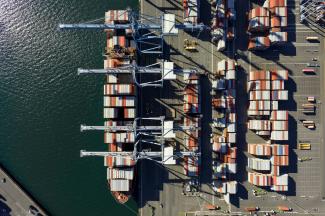
The conflict in the Middle East threatens not only energy trade but also other trade flows, albeit to a lesser extent. The risk to container shipping is limited by the fact that the region was already a no-go area due to Houthi attacks in 2023-24. And …
4th March 2026
The course of the war between the US/Israel and Iran remains unclear, but investors appear increasingly willing to look through the near-term uncertainty. That is optimistic, but not unrealistic. While some Asian equity markets saw extreme falls …
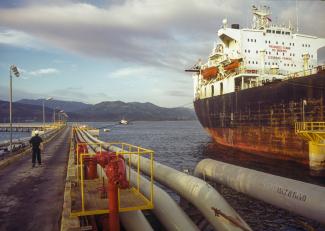
While the closure of the Strait of Hormuz dominates the near-term outlook for energy prices, shifting behaviour in the wider oil market – not least a greater willingness from India and China to import Russian oil – is helping to relieve some of the upward …
Surveys suggest the underlying economy is reaccelerating The broad-based strength in the February ISM Services Index, along with the recent improvement in the manufacturing index, suggests the underlying economy is reaccelerating. Indeed, it leaves our …
The conflict in the Middle East risks damaging the perception of safety in the region’s tourist hubs, especially in the Gulf. History shows that such crises can trigger steep declines in visitor numbers that take years to recover. The likes of the UAE …
The energy price shock caused by the conflict in the Middle East will worsen current account positions in net energy-importing EMs. But unlike recent energy shocks, the external balance sheets of most EMs are starting from a position of strength, limiting …
MPC looks through energy price spike The decision by Poland’s central bank to cut its policy rate by 25bp to 3.75% came as a surprise given the inflationary impact of this week’s spike in oil and gas prices. But in spite of the clear dovish bias on the …
Weaker February probably just a blip The sharp 15% fall in home purchase mortgage applications in February was probably due to temporary weather effects, as refinancing activity strengthened and mortgage costs continued to ease over the month. We continue …
War in the Middle East has triggered a brutal sell-off in some Asian financial markets. But how much reflects profit-taking after hefty gains, and how much deeper concern about the macroeconomic impact of sharply higher energy prices? In this special …
Fresh conflict in the Middle East has understandably consumed the global macro news cycle – after all, a sharp and sustained rise in energy prices risks an inflationary resurgence which could, in the very least, force central banks to abandon any plans …
A major policy push to boost domestic demand would both reflate China’s economy and reduce its large current account surplus, which is a source of tension with other countries. But this looks unlikely given concerns about diminishing monetary and fiscal …
China’s government will lay out its fiscal plan for 2026 at the National People’s Congress on Thursday. While the headline deficit target and special bond quota figures will get the most attention, they won’t tell the whole story. The composition of …
Services activity picking up The PMIs point to an improvement in economic momentum last month, driven by manufacturing and services. The recent decline in US tariffs should provide a modest tailwind to exports and manufacturing activity over the coming …
Australia’s public sector can’t be blamed for the renewed acceleration in inflation across the second half of last year. But the inexorable surge in public spending in recent years is a key reason why capacity constraints never disappeared despite …
Further policy tightening remains likely as growth rises further above-trend Although the underlying details were a mixed bag, we suspect the RBA will still be concerned that growth is running above potential in Australia. The 0.8% q/q rise in real GDP …
The latest surge in Gilt yields mainly reflects investors’ assessment of how the conflict in the Middle East will affect inflation and monetary policy in the UK rather than having much to do with today’s fiscal statement . But we doubt inflation …
3rd March 2026
Iran’s attacks over the past few days have struck at the heart of Dubai’s economy. The near-term hit to GDP could be larger than in other parts of the Gulf (although that will depend on the length of disruptions to energy supplies). And, over a longer …
In light of the escalating crisis in the Middle East, including the cessation of LNG production in Qatar, this Update provides broader context about global LNG trade and the implications for energy prices. Which countries are the biggest LNG producers in …
The Chancellor didn’t announce any major new policies in her fiscal statement and, on the face of it, has a bit more money to play with come the Budget in the autumn. But that could be swamped by events in the Middle East. The economics could therefore …
A prolonged conflict in the Middle East pushing oil to $90-100pb for a sustained period would be a significant headwind for the global economy. Importers such as the euro-zone would be hit hardest, while damage to production and export capacity would cap …
Chancellor’s extra headroom may be wiped out by Middle East conflict The Chancellor didn’t announce any major new policies in her fiscal statement and, on the face of it, has a bit more money to play with come the Budget in the autumn. But that could be …
Growth remains soft, easing cycle to start this month Continued strong export growth supported Brazil’s economy in Q4 but, at 0.1% q/q, GDP growth remained tepid. Geopolitical tensions and higher global energy prices probably won’t prevent the central …
A softening new supply pipeline and indications that demand is gradually improving suggest office vacancy in Europe should stabilise this year. That said, we expect that any falls will be small compared to past cycles. And vacancy is still likely to trend …
Increases in energy prices could add more than half a percent to inflation February’s jump in core inflation, together with the increases in oil and gas prices since the weekend, reduce the chance of the ECB cutting interest rates this year. But as things …
Should the price of Brent crude oil spike to $90-100pb in the wake of the Iran war, the government could plausibly lift its energy subsidies by as much as 0.7% of GDP. While that would contribute to a renewed widening of the budget deficit this year, the …
Amid widening conflict in the Middle East, our economist team held an online briefing first thing Monday to tackle some of the key questions that clients have been asking. In this edited clip from that briefing, you’ll hear the team tackle issues, …
2nd March 2026
The conflict with Iran – and Iran’s retaliation – might trigger a contraction in Israeli GDP this quarter, but the experience of the 12-day war last year suggests that activity should bounce back quickly. And unlike in 2025, Israel enters this conflict …
With actual CPI inflation and inflation expectations both still above target-consistent rates, the Bank of England is likely to be more sensitive to the upside risks to inflation caused by the recent events in the Middle East than some other central …
As net energy importers, most economies in Asia are worse off and facing higher inflation as a result of the attacks on Iran. But oil prices would have to rise much further than they have so far – to US$90~100 per barrel – to change the path of monetary …
Surge in prices paid index will embolden FOMC hawks The essentially unchanged level of the ISM Manufacturing Index in February, after the prior month’s surge, suggests that the domestic factory sector is benefiting from stronger global conditions tied to …
Iran’s strikes on the Gulf economies have punctured the perceived security and stability of the region. This will lead to disruptions to non-oil activity in the near term and, if the attacks persist, could also threaten investment and diversification …
This Update considers whether any lessons can be learned from the oil crisis of the early 1970s when it comes to the potential effects on Treasuries and US equities from the current conflict in the Middle East . The risk of a closure of the Strait of …