
We’re continuing to support client decision-making during the Middle East conflict with comprehensive but concise analysis and daily online briefings. All of our key analysis on this crisis can be found here. Below are some highlights from our coverage on Wednesday, 11th March.
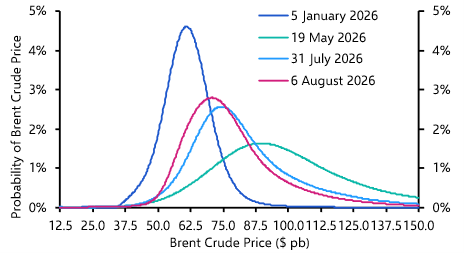
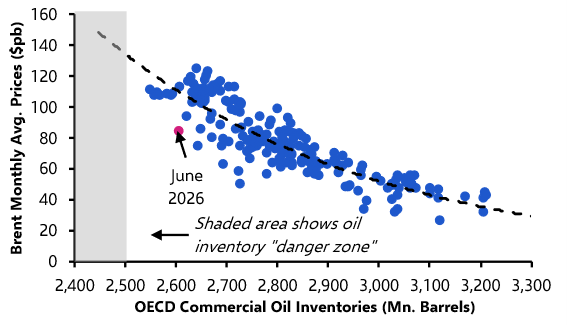
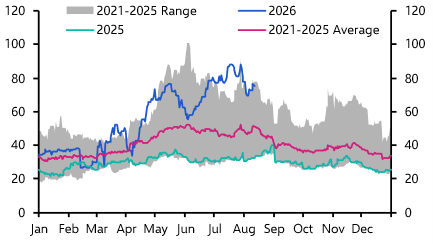
- A record release of oil supply coordinated by the International Energy Agency will provide temporary relief to a starved market but prices are likely to rise back above $100/barrel so long as the Strait of Hormuz remains closed.
- That assessment is based on our macro and market scenarios for modelling pathways in this conflict. Martin Wolf, the Chief Economics Commentator of the Financial Times, featured these scenarios in his latest column, published today.
- The prospect of the Fed or Bank of England actually raising rates in this conflict would only come into view under our more severe scenario, which sees the fighting escalating and oil rising to $150/barrel.
- We’re holding daily online Drop-In briefings so clients can get answers directly from the economist team and Thursday’s session previews the Bank of England’s March meeting. You can also watch today’s session about exposures in Latin America.
- While the Middle East conflict is dominating headlines and markets, clients are also asking about risks from private credit funds. Our view is that these risks are sizeable but manageable from a macro-stability perspective, especially as the Federal Reserve and other central banks are well positioned to cushion any shock.