

The Fractured Age
How the Return of Geopolitics Will Splinter the Global Economy
Tuesday, October 7, 2025
IFC Building, 2121 Pennsylvania, F 5P-100
09:30am - 11:00am
This is a special Capital Economics event, exclusive for employees of the World Bank Group.
Many governments are now framing their trade and investment policies around geopolitics and the need to respond to a shifting global order – but how much is actually changing? Is the split between the US and China still the key fissure in the fracturing global economy? And what are the implications for geoeconomic alliances, for policy choices and for financial markets?
Join us for a special Capital Economics in-person event for the World Bank on Tuesday, October 7th at IFC, 2121 Pennsylvania, F 5P-100 exploring how the global economy is fracturing and the shape of the new world order. This is an hour-long session giving World Bank Group staffers the opportunity to hear from our economists and to discuss the implications of the re-emergence of geopolitics as a driving force in the global economy. The session will explore issues including:
- The extent to which tariffs are reshaping global alignments;
- The likelihood of a lasting thaw in the US-China relationship or whether the rift will widen;
- Whether a third bloc could emerge from the fracturing process to challenge the US and China.
Request your space
Please complete the below form to request a space at this event. A member of our team will be in touch to confirm.
Meet our lead speakers
-
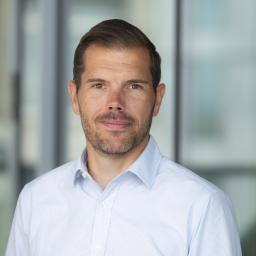
Neil Shearing
Group Chief Economist
Neil Shearing is our Group Chief Economist. He has overall responsibility for managing our team of economists and leading our research, as well as developing the firm’s products and its relationship with clients. He is also a director of the company. Neil is the first point of contact for many clients and presents regularly on the global economic and financial market outlook. He is a well-known voice within the investment community and has written articles in the Financial Times and a number of other newspapers, as well as appearing regularly on TV and radio. He is the author of "The Fractured Age: How the Return of Geopolitics will Reshape the Global Economy", which was named as one of the Financial Times’ Books of the Year for 2025. Prior to becoming Group Chief Economist, Neil was our Chief Emerging Markets Economist, managing a team that won several awards for forecast accuracy. He also managed our New York office. Neil joined Capital Economics from HM Treasury where he worked as an Economic Adviser in various areas, including fiscal policy and global economics. He holds degrees in Economics from the University of York and the University of London and is an Associate Fellow in the Global Economy programme at Chatham House.
-
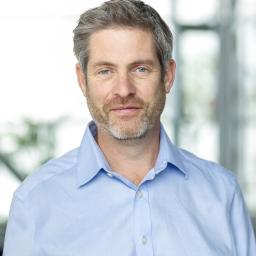
Mark Williams
Chief Asia Economist
Mark Williams is Chief Asia Economist at Capital Economics, leading a team of analysts based in Singapore and London. He has three decades of experience covering the region, with a particular focus on China's economy and financial markets. Mark’s work is regularly cited in the Economist, Financial Times, Wall Street Journal and New York Times. Mark and his team have developed a reputation for building innovative indicators to track important trends, including their China Activity Proxy, which has become widely followed since it was first published in 2009; more recently a gauge of tariff re-routing activity; and their Global Fracturing database that tracks how geopolitical shifts are affecting global trade and financial flows. Before joining Capital Economics, Mark was at HM Treasury in London. He has degrees in Chinese and Economics from the universities of Edinburgh and Oxford.
-
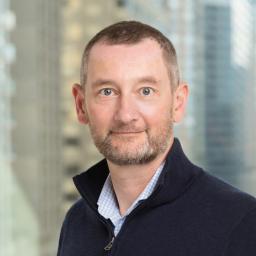
Paul Ashworth
Chief Data and Modelling Economist
Paul Ashworth is our Chief Data and Modelling Economist, with overall responsibility for our Data and Modelling team. He joined Capital Economics in 2001 and has led our Toronto office since 2007. Paul joined Capital Economics from the National Institute of Economic and Social Research (NIESR) where he worked on their large-scale model of the global economy and was responsible for coverage of various countries, including Canada and Germany. He holds degrees in Mathematics and Economics from Strathclyde and Warwick Universities, and his PhD thesis focused on asymmetry and asymmetric adjustment in macroeconomics.