
This Weekly Roundup covers a busy week in central banking, our outlook for beleaguered bond markets, and upcoming briefings on our latest macro and market forecasts. Below are some highlights from our coverage from the past week.
1. Central bankers faced a "classic policy dilemma" in meetings this past week: whether to prioritise inflation or growth risks from higher energy prices. Outcomes were broadly in line with our forecasts, though several signals warrant attention.
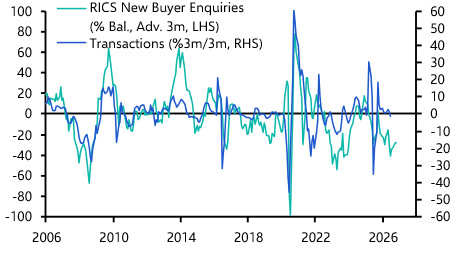
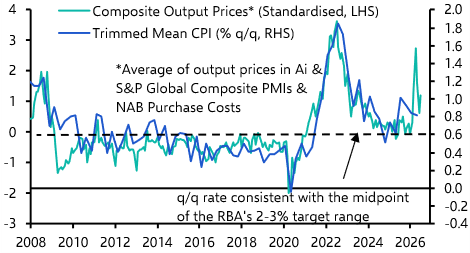
We think the ECB, for example, could hike as early as next month if energy prices continue to rise. The Bank of England also “has its finger hovering over the interest rate hike button.” In Australia, surging fuel costs are compounding inflationary pressures, and we now expect a further 50 basis points of tightening following this week’s hike. The latest episode of our weekly podcast has more, while our full coverage of the week’s meetings can be found here.
2. The spike in energy prices has triggered a sharp repricing of interest rate expectations, with gilts bearing the brunt of the sell-off. However, our base case – a severe but relatively short-lived conflict – suggests that government bonds could regain much of their lost ground before the end of the year.
3. We’ll be publishing updated macro and market forecasts in the coming week that reflect the uncertainties around this conflict. Join our economists on Thursday 26th March at 0800 or 1500 GMT for online briefings about these new forecasts. Register here.
4. War may dominate the headlines, but the AI investment boom is rolling on. So far, the beneficiaries of this are mainly export-heavy economies like Taiwan and Mexico, and the US, which leads in AI. Beyond America, however, the productivity gains are still hard to find. Explore all our AI hub for more analysis and data on this transformational technology.
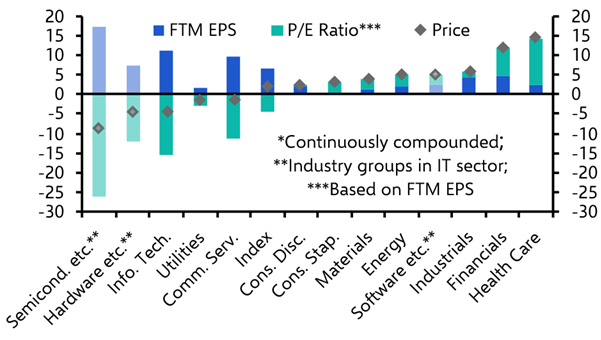
5. The AI boom may remain insulated even as a broader US manufacturing recovery comes under threat from high oil prices.